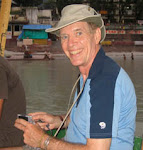
As it turns out, yesterday’s yoga practice provides a wonderful lens through which to view the integration of my mental, physical, and spiritual preparation.
Our practice at the studio was 108 sun salutations in honor of the summer solstice. A sun salutation consists of 12 yoga poses, or asanas. You flow from one pose to the next. Each inhalation brings you to an expanding, stretching asana; each exhalation brings you to a contracting asana. 108 sun salutations of 12 asanas each is 108 X 12 = 1,296 asanas. Even if you make it effortless, it is definitely a physical workout!
“Sun salutation” is the translation of “surya namaskar.” Surya is sun; namaskar is Hindu for namaste, from the root, to bow. So a sun salutation is a way of bowing to, greeting, praising the sun. Why 108? The number 108 plays a significant role in Buddhist, Hindu, and other traditions as is evidenced in many ways. Buddhism identifies 108 different sins and worries. “Temples often have 108 steps, 108 columns, or some other feature.” Ancient Indian astronomers reported that the sun is 108 sun-diameters from the earth, and the moon is 108 moon-diameters from the earth. In fact these distances are 107.6 sun-diameters and 110.6 moon diameters. (With thanks to Mark Barone for his research on 108.)
Whatever its origin, 108 has strong spiritual roots. With each of the 108 salutations, we honor the sun without, its light, its warmth, and all that lives, grows, flourishes because of the sun. With each of the 108 salutations, we honor the sun within, the fire that burns in our belly, the light that shines in our heart. 108 spiritual sun salutations.
In fact, we did not do 108 sun salutations without stopping. Rather, we did nine sets of twelve salutations. Between sets, we would sometimes stand silently, observing the sun without and the sun within. At other times, we would lie on our mats in savasana, or corpse pose. It was during one savasana that one of our instructors read a poem.
Brown earth lay blanketed beneath
the weight of white snow.
People hold within their heart
the promise of light
Light that overcomes the night
Igniting fire
That burns a hole
all the way to the hot dry summer fields
The hope that the light holds in winter
becomes in summer
the knowing of the sun’s pathway back again
We poise on the edge of these great turnings
Balanced day and night
But for a moment.
Cheryl Ban
In hearing this poem, I understood, in a way that I had not before, that the sun within me is on its knowing path back again. That knowing—even when it is not knowing—is one of the gifts of this stage in my life. That knowing—of the promise, of the fire, of the hope—is the knowing that I seek to share with those I am mentoring. That knowing—both in knowing and not—is a source of great peace and equanimity.
As I honored the path of the sun without, I also honored—and understood a little more fully—the path of the sun within. 108 sun salutations brought more closely together my mental, physical, and spiritual preparation for this journey that I am on.
Sunday, June 24, 2007

Sunday, June 17, 2007
Preparations 4: The Spirit
I grew up in the Episcopal Church. I was confirmed, and served as an acolyte throughout junior and senior high schools. I considered entering the ministry. I earned my Boy Scout God and Country award. I certainly had misgivings along the way. One occurred when the rector told me that worshiping in the woods at scout camp was not appropriate. “The outdoors is not a church.” I left the church for good as a college freshman when some poor counsel from the same rector almost caused an irreconcilable rift with my family.
Over much of the past 40 years, religion in my life has taken the form of christenings, bar mitzvahs and bat mitzvahs, weddings, funerals. A series of life-altering events over the past four years or so brought me face-to-face with my spirit, and my soul, and sent me on a quest to integrate them into my life.
Yoga became the catalyst for that integration. The yoga that we practice at the studio is Tantra-based. In the west, Tantra has become known as the yoga of sex; unfortunately, this is a significant misrepresentation. According to Pandit Rajmani Tigunait (Tantra Unveiled) “the literal meaning of Tantra is ‘to weave, to expand, to spread.'” Our practice uses asana (yoga poses), pranayama (conscious breathing), and sound, primarily through chanting. A primary focus of the practice is to bring awareness to the absolute (whatever name one may give it), to learn to live in this life with constant awareness of the divine that exists in everything.
Yoga, then, is one of the ways in which I am preparing spiritually for this pilgrimage. In addition to practicing at the studio on Saturdays, I have a daily morning practice. That practice, which begins at 5 each morning and lasts approximately an hour, begins with three poses (Viparita Karani, or Legs Up the Wall pose; Pigeon Pose; and Supta Baddha Konasana, or Reclining Butterfly Pose). This is followed by Kapalabhati (also known as Breath of Fire or abdominal breathing) for 4-5 minutes. I conclude the practice with Agni Sara, or abdominal lifts. The practice is a wonderful way to set my pace for the day.
Prayer is another element of my daily spiritual life, and follows my yoga practice each morning. The first is a prayer of thanksgiving. I follow the Native American cycle of prayer: to the east (for all the gifts that I will receive throughout the day: challenges, opportunities, laughter, tears, touch, learnings, etc.); to the south, for all that I bring to receiving those gifts (my mind, body, and soul; my humor; my tenacity; my courage); to the west, for all the gifts that I will give throughout the day, of for all those who will receive those gifts; to the north, true north, for guiding me through the day, and granting me a place of rest at night; to the earth, for food, clothing, shelter, the water I drink, the ground that I walk on, and for nourishing my roots; to the sky for the sun, stars, moon, the air that I breath, the light of day and dark of night, for the rain and snow); and to One, that I may live this day as one. I follow this prayer with a second. Om Shanti, Om Shanti, Om Shanti. Peace to me, peace to you, peace to the world. I offer peace to each member of my families of relationship and friendship, and to each of the communities that are a part of my life.
Just as our breath affects our body and our mind, so does the sound that surrounds us. There is a science of sound that I make no claim to understand. However, I have always recognized the power of sound to affect my mind, my energy, and my emotion. In the background when I work, and on my iPod when I am “on the road,” are sounds of integration, of oneness. These range from chanting of various mantras to Gregorian chants, to the rhythms and songs of numerous other cultures around the globe. While virtually none of this music is in my language, and I understand the words of only a small percentage, in hearing it I know the meaning, the message, and the power that it conveys.
Finally, in preparation, I meditate. I am not very good at it. I am not as disciplined as I would like to be. Like yoga, meditation is a practice. I am practicing.
Over much of the past 40 years, religion in my life has taken the form of christenings, bar mitzvahs and bat mitzvahs, weddings, funerals. A series of life-altering events over the past four years or so brought me face-to-face with my spirit, and my soul, and sent me on a quest to integrate them into my life.
Yoga became the catalyst for that integration. The yoga that we practice at the studio is Tantra-based. In the west, Tantra has become known as the yoga of sex; unfortunately, this is a significant misrepresentation. According to Pandit Rajmani Tigunait (Tantra Unveiled) “the literal meaning of Tantra is ‘to weave, to expand, to spread.'” Our practice uses asana (yoga poses), pranayama (conscious breathing), and sound, primarily through chanting. A primary focus of the practice is to bring awareness to the absolute (whatever name one may give it), to learn to live in this life with constant awareness of the divine that exists in everything.
Yoga, then, is one of the ways in which I am preparing spiritually for this pilgrimage. In addition to practicing at the studio on Saturdays, I have a daily morning practice. That practice, which begins at 5 each morning and lasts approximately an hour, begins with three poses (Viparita Karani, or Legs Up the Wall pose; Pigeon Pose; and Supta Baddha Konasana, or Reclining Butterfly Pose). This is followed by Kapalabhati (also known as Breath of Fire or abdominal breathing) for 4-5 minutes. I conclude the practice with Agni Sara, or abdominal lifts. The practice is a wonderful way to set my pace for the day.
Prayer is another element of my daily spiritual life, and follows my yoga practice each morning. The first is a prayer of thanksgiving. I follow the Native American cycle of prayer: to the east (for all the gifts that I will receive throughout the day: challenges, opportunities, laughter, tears, touch, learnings, etc.); to the south, for all that I bring to receiving those gifts (my mind, body, and soul; my humor; my tenacity; my courage); to the west, for all the gifts that I will give throughout the day, of for all those who will receive those gifts; to the north, true north, for guiding me through the day, and granting me a place of rest at night; to the earth, for food, clothing, shelter, the water I drink, the ground that I walk on, and for nourishing my roots; to the sky for the sun, stars, moon, the air that I breath, the light of day and dark of night, for the rain and snow); and to One, that I may live this day as one. I follow this prayer with a second. Om Shanti, Om Shanti, Om Shanti. Peace to me, peace to you, peace to the world. I offer peace to each member of my families of relationship and friendship, and to each of the communities that are a part of my life.
Just as our breath affects our body and our mind, so does the sound that surrounds us. There is a science of sound that I make no claim to understand. However, I have always recognized the power of sound to affect my mind, my energy, and my emotion. In the background when I work, and on my iPod when I am “on the road,” are sounds of integration, of oneness. These range from chanting of various mantras to Gregorian chants, to the rhythms and songs of numerous other cultures around the globe. While virtually none of this music is in my language, and I understand the words of only a small percentage, in hearing it I know the meaning, the message, and the power that it conveys.
Finally, in preparation, I meditate. I am not very good at it. I am not as disciplined as I would like to be. Like yoga, meditation is a practice. I am practicing.
Sunday, June 10, 2007
Preparations 3: The Body
For me, the physical preparation was my primary concern regarding this trip. It is not that I am lazy; I just have never had a desire to go to a gym and work out. However, when I commit, it is a commitment of 100%+. Since January, I have been training three days a week at the gym, and have incorporated core training into my daily yoga practice.
Let me begin with the daily core training. It is really basic. There are four exercises, and I do two sets of each. First, I do twenty crunches; my legs are elevated at a 45-degree angle, with my lower leg parallel to the ground. As I do my crunch, I bring my legs in toward me, and roll my lower back off the ground. The next exercise is resistance walking. I do twenty steps to each side, using a bungee cord for resistance; this has helped to increase my hip stability. I then lay down on my back, and do twenty single-leg bridges with a press. For this, I place one foot flat on the floor, with the other calf resting on my knee. I lift up in a yoga-based bridge pose; at the top, I stop to do a press with a relatively light weight. (This exercise is done on one leg the first set, and the other leg the second set.) This has contributed to stability and balance, as well as strength. Finally, I roll over, and do ten slow diamond push-ups.
On Saturdays, my workout is strictly cardio. (I generally do yoga in the morning and the cardio workout in the afternoon.) After my stretching, I move to the bike. Using my heart rate monitor, I establish my training heart rate zones for the day. Then I spend 45-60 minutes on the bike, and the remaining 30-45 minutes (a total of 90 minutes) on the elliptical trainer. I vary the resistance to keep me in my heart rate training zones. Usually I am between 75% and 100% of maximum on the bike. By the time I get to the elliptical, it is time to back off to a lesser resistance and a lower training zone.
Tuesdays and Thursdays, I train with Mitchel Heard at the New York Sports Club here in Hoboken. It has been a great experience, and I can definitely see the results! I begin with some stretching, followed by 20 minutes on the bike in advance of my work with Mitchel. We tend to train in “super sets,” groups of exercise with no breaks between one and the next. This helps to push up the cardio. Most often, the session will combine resistance training with cardio-oriented work (hop up/hop down, shuffle on the step, lunge walking with a medicine ball, mountain climber, agility ladder, etc.). Mitchel is constantly keeping an eye on my heart rate monitor. For those who are interested, this is my training chart for May 10.
Super set: Skull crusher (35 pounds, 15 reps); Reverse bench pushup (12 reps)
Super set: Lateral pull down (70 pounds, 15 reps); Seated row (95 pounds, 15 reps)
Super set: Bench chest press (dumbbells 20 pounds each, 15 reps); Bench dips (10 reps)
Super set: Incline bench row (20 pounds, 15 reps); Seated bicep curl (12.5 pounds, 15 reps)
Super set: Squats (Smith machine, 95 pounds, 20 reps); Stationary lunge (25 pounds, 10 reps each side)
Super set: Frontal lunge (10 reps each leg); Wall sit (1 minute)
For me, it has been an interesting experience as I have brought my yoga training into the gym. Balance, breathing, concentration, and practice are all concepts that have facilitated my physical conditioning. The heart rate monitor has been an invaluable tool. And Mitchel is nothing less than the best trainer I could ask for.
Let me begin with the daily core training. It is really basic. There are four exercises, and I do two sets of each. First, I do twenty crunches; my legs are elevated at a 45-degree angle, with my lower leg parallel to the ground. As I do my crunch, I bring my legs in toward me, and roll my lower back off the ground. The next exercise is resistance walking. I do twenty steps to each side, using a bungee cord for resistance; this has helped to increase my hip stability. I then lay down on my back, and do twenty single-leg bridges with a press. For this, I place one foot flat on the floor, with the other calf resting on my knee. I lift up in a yoga-based bridge pose; at the top, I stop to do a press with a relatively light weight. (This exercise is done on one leg the first set, and the other leg the second set.) This has contributed to stability and balance, as well as strength. Finally, I roll over, and do ten slow diamond push-ups.
On Saturdays, my workout is strictly cardio. (I generally do yoga in the morning and the cardio workout in the afternoon.) After my stretching, I move to the bike. Using my heart rate monitor, I establish my training heart rate zones for the day. Then I spend 45-60 minutes on the bike, and the remaining 30-45 minutes (a total of 90 minutes) on the elliptical trainer. I vary the resistance to keep me in my heart rate training zones. Usually I am between 75% and 100% of maximum on the bike. By the time I get to the elliptical, it is time to back off to a lesser resistance and a lower training zone.
Tuesdays and Thursdays, I train with Mitchel Heard at the New York Sports Club here in Hoboken. It has been a great experience, and I can definitely see the results! I begin with some stretching, followed by 20 minutes on the bike in advance of my work with Mitchel. We tend to train in “super sets,” groups of exercise with no breaks between one and the next. This helps to push up the cardio. Most often, the session will combine resistance training with cardio-oriented work (hop up/hop down, shuffle on the step, lunge walking with a medicine ball, mountain climber, agility ladder, etc.). Mitchel is constantly keeping an eye on my heart rate monitor. For those who are interested, this is my training chart for May 10.
Super set: Skull crusher (35 pounds, 15 reps); Reverse bench pushup (12 reps)
Super set: Lateral pull down (70 pounds, 15 reps); Seated row (95 pounds, 15 reps)
Super set: Bench chest press (dumbbells 20 pounds each, 15 reps); Bench dips (10 reps)
Super set: Incline bench row (20 pounds, 15 reps); Seated bicep curl (12.5 pounds, 15 reps)
Super set: Squats (Smith machine, 95 pounds, 20 reps); Stationary lunge (25 pounds, 10 reps each side)
Super set: Frontal lunge (10 reps each leg); Wall sit (1 minute)
For me, it has been an interesting experience as I have brought my yoga training into the gym. Balance, breathing, concentration, and practice are all concepts that have facilitated my physical conditioning. The heart rate monitor has been an invaluable tool. And Mitchel is nothing less than the best trainer I could ask for.
Sunday, June 3, 2007
Preparations 2: The Mind
As I talk of preparations for my pilgrimage, I am finding it difficult to separate the mind, from the body, from the spiritual preparation. Perhaps that is because these three elements are woven together within us just as strands of DNA. One can pick up a strand and examine it. However, it is inextricably linked to the other strands. So, in the coming weeks I will seek to examine the strands of my mind, body, and spirit as I prepare for this journey. I will treat them as separate entities, even though they are not. Today, I will write of my mental preparations.
Do you remember everything you brought on your last trip, or everything that you forgot? If you are like me, it is the latter. I did not bring jeans or a sweater on the yoga retreat last week-end. Fortunately, I didn’t need them. At the same time, I could not tell you what was packed, and came home unused. Turning again to my favorite author on the subject, Philip Cousineau (The Art of Pilgrimage) writes, “If you don’t take the time to sit and reflect before you leave, you’ll surely be remembering what you’ve forgotten on the way to the airport or on the plane. By then it is too late. This tends to be true for what goes into your bags as well as what goes into your heart about your journey.”
No, my heart is not in my head. However, too often we use our minds to filter our hearts, to tell them what to feel and how to respond. With this in mind (no pun intended), I am working to free my heart of the judgment that is too quick to come as we visit other cultures. The reading I am doing, discussed in earlier entries, is one key to this. As I walk the streets, as I encounter others whose bodies, beliefs, economics, values, differ from my own, I seek to be consciously open and non-judgmental.
As a photographer, a great deal that enters my mind comes in through the lens of my camera. I am not sure that I find anything more powerful than a visual image. On the trains, in restaurants, passing through crowds, I take pictures. I have no camera with me (or if I do, I don’t pick it up). The pictures I take are in my mind. I ask, “How would I shot this person? In what way does his, or her, soul reflect outward?” I record the image.
I also dabble in words, so writing is part of my mental preparation as well. I have journals that contain myriad threads of my life. There are parts that are fully revealed in page after page of tightly penned entries. Other parts can be pieced together; it isn’t all there, but there is enough to know the story. For other pieces of my life, there are empty pages. I have vowed that this trek will not be empty pages in my life’s journal. And so I blog. I will soon renew the habit first introduced to me by Julia Margaret Cameron in The Artist’s Way, that of daily pages. I want to return to the habit of making a daily recording, so that I am prepared to do so in India.
Through words, pictures, and an open heart, I am preparing myself.
Do you remember everything you brought on your last trip, or everything that you forgot? If you are like me, it is the latter. I did not bring jeans or a sweater on the yoga retreat last week-end. Fortunately, I didn’t need them. At the same time, I could not tell you what was packed, and came home unused. Turning again to my favorite author on the subject, Philip Cousineau (The Art of Pilgrimage) writes, “If you don’t take the time to sit and reflect before you leave, you’ll surely be remembering what you’ve forgotten on the way to the airport or on the plane. By then it is too late. This tends to be true for what goes into your bags as well as what goes into your heart about your journey.”
No, my heart is not in my head. However, too often we use our minds to filter our hearts, to tell them what to feel and how to respond. With this in mind (no pun intended), I am working to free my heart of the judgment that is too quick to come as we visit other cultures. The reading I am doing, discussed in earlier entries, is one key to this. As I walk the streets, as I encounter others whose bodies, beliefs, economics, values, differ from my own, I seek to be consciously open and non-judgmental.
As a photographer, a great deal that enters my mind comes in through the lens of my camera. I am not sure that I find anything more powerful than a visual image. On the trains, in restaurants, passing through crowds, I take pictures. I have no camera with me (or if I do, I don’t pick it up). The pictures I take are in my mind. I ask, “How would I shot this person? In what way does his, or her, soul reflect outward?” I record the image.
I also dabble in words, so writing is part of my mental preparation as well. I have journals that contain myriad threads of my life. There are parts that are fully revealed in page after page of tightly penned entries. Other parts can be pieced together; it isn’t all there, but there is enough to know the story. For other pieces of my life, there are empty pages. I have vowed that this trek will not be empty pages in my life’s journal. And so I blog. I will soon renew the habit first introduced to me by Julia Margaret Cameron in The Artist’s Way, that of daily pages. I want to return to the habit of making a daily recording, so that I am prepared to do so in India.
Through words, pictures, and an open heart, I am preparing myself.
Friday, May 25, 2007
Preparations 1: Logistics
How does one prepare for a trek?
“Practice, practice, practice,” is certainly one part of it. Cousineau (The Art of Pilgrimage) writes, “Being ready mentally, spiritually, and physically makes us lighter on our feet, more adroit at making decisions, and perhaps can even keep chaos at bay.” In the coming weeks I will write more about my mental, spiritual, and physical practices. Today, as I prepare to leave on a weekend retreat, I want to focus on the logistics.
Aaron is a wonderful host for all of these events. Once we arrive in India, all of our arrangements are taken care of. There are no concerns about transportation, lodging, etc. We already have a list of what to bring (ranging from fleece pants to shorts) and what not to bring (the hair dryer and electric razor).
I have made my flight arrangements (it is a direct flight from Newark to Delhi), and recently received my new passport. (If you haven’t seen them, the new passports do everything but sing the Star Spangled Banner. Every page displays an etching of a different scene of Americana.)
In June I will apply for my visa, I will also see my physician regarding any shots that I will need. And, I will start to provision from the list we have been provided. The top item will be the hiking shoes, which will need to be well broken in prior to departing.
July will be time enough to start really stock-piling the film I will need. My digital camera is fine for color, but I will be carrying the 35 mm film camera for black and white.
I think the logistics bases are covered.
“Practice, practice, practice,” is certainly one part of it. Cousineau (The Art of Pilgrimage) writes, “Being ready mentally, spiritually, and physically makes us lighter on our feet, more adroit at making decisions, and perhaps can even keep chaos at bay.” In the coming weeks I will write more about my mental, spiritual, and physical practices. Today, as I prepare to leave on a weekend retreat, I want to focus on the logistics.
Aaron is a wonderful host for all of these events. Once we arrive in India, all of our arrangements are taken care of. There are no concerns about transportation, lodging, etc. We already have a list of what to bring (ranging from fleece pants to shorts) and what not to bring (the hair dryer and electric razor).
I have made my flight arrangements (it is a direct flight from Newark to Delhi), and recently received my new passport. (If you haven’t seen them, the new passports do everything but sing the Star Spangled Banner. Every page displays an etching of a different scene of Americana.)
In June I will apply for my visa, I will also see my physician regarding any shots that I will need. And, I will start to provision from the list we have been provided. The top item will be the hiking shoes, which will need to be well broken in prior to departing.
July will be time enough to start really stock-piling the film I will need. My digital camera is fine for color, but I will be carrying the 35 mm film camera for black and white.
I think the logistics bases are covered.
Friday, May 18, 2007
One
If you have never been to my apartment, imagine an open loft space with high ceilings, skylights, large windows with views of Manhattan, and a working fireplace. As is often the case, the fireplace commands a position of attention. Understandably, it is over the fireplace that I have hung perhaps my most prized photograph.
One by Nancy Burston is actually a composite of three photographs. I first saw it when I went to a gallery to see another photographer’s exhibit. While this photograph held my attention for only a few minutes, it remained with me. It spoke to me, and kept calling me back; I was constantly seeing it in my mind’s eye. The photograph is a composite of portraits of people who are likenesses of the commonly accepted perceptions of Jesus, Buddha, and Muhammad. It is in shades of orange. As the light changes, as you move from one place in the room to another, as you stand up or sit down, the image that you see changes. The Gods of worldly religions as One. They are ever-present—in my living room, and in my life.
The theme of one first entered my consciousness during a Yoga for Transformation workshop that began in the fall of 2006 and continued into the winter. One of the outcomes of the workshop was the development of a personal mission statement. This was mine.
T"o see the world in a grain of sand, in this moment, each moment. Every day seeking in that vision greater clarity and acceptance. And, sharing my sight with all whom I touch – with warmth, joy, and goodness of intent. " (From William Blake’s “Auguries of Innocence, “ To see a World in a Grain of Sand, And a Heaven in a Wild Flower. Hold Infinity in the palm of your hand And Eternity in an hour.)
Others have echoed this theme. One of the most eloquent of these was Black Elk. The first peace, which is the most important, is that which comes from within the souls of men when they realize their relationship, their oneness, with the universe and all its powers, and when they realize that at the center of the universe dwells Wakan-Tanka, and that this center is really everywhere, it is within each of us. This is the real peace, and the others are but reflections of this. The second peace is that which is made between two individuals, and the third is that which is made between two nations. But above all you should understand that there can never be peace between nations until there is first known that true peace which is within the souls of men. Wakan-Tanka is the term for the "sacred" or the "divine" as understood by the Lakota people.
One instructs me to look for that sacredness, that divine, within each of us. That I live this moment, each moment, striving toward one is my daily commitment.
One by Nancy Burston is actually a composite of three photographs. I first saw it when I went to a gallery to see another photographer’s exhibit. While this photograph held my attention for only a few minutes, it remained with me. It spoke to me, and kept calling me back; I was constantly seeing it in my mind’s eye. The photograph is a composite of portraits of people who are likenesses of the commonly accepted perceptions of Jesus, Buddha, and Muhammad. It is in shades of orange. As the light changes, as you move from one place in the room to another, as you stand up or sit down, the image that you see changes. The Gods of worldly religions as One. They are ever-present—in my living room, and in my life.
The theme of one first entered my consciousness during a Yoga for Transformation workshop that began in the fall of 2006 and continued into the winter. One of the outcomes of the workshop was the development of a personal mission statement. This was mine.
T"o see the world in a grain of sand, in this moment, each moment. Every day seeking in that vision greater clarity and acceptance. And, sharing my sight with all whom I touch – with warmth, joy, and goodness of intent. " (From William Blake’s “Auguries of Innocence, “ To see a World in a Grain of Sand, And a Heaven in a Wild Flower. Hold Infinity in the palm of your hand And Eternity in an hour.)
Others have echoed this theme. One of the most eloquent of these was Black Elk. The first peace, which is the most important, is that which comes from within the souls of men when they realize their relationship, their oneness, with the universe and all its powers, and when they realize that at the center of the universe dwells Wakan-Tanka, and that this center is really everywhere, it is within each of us. This is the real peace, and the others are but reflections of this. The second peace is that which is made between two individuals, and the third is that which is made between two nations. But above all you should understand that there can never be peace between nations until there is first known that true peace which is within the souls of men. Wakan-Tanka is the term for the "sacred" or the "divine" as understood by the Lakota people.
One instructs me to look for that sacredness, that divine, within each of us. That I live this moment, each moment, striving toward one is my daily commitment.
Sunday, May 13, 2007
What Makes This a Pilgrimage?
The complete circle is a universal symbol for the soul—an image of wholeness—and the goal of the sacred journey is to become as whole again as possible, (“The Art of Pilgrimage,” Phil Cousineau).
As I continue to reflect on why I am taking the Himalayan journey, I know that it does have to do with soul, and with spirit; and it has to do with continuing the longer journey that I am on to bring mind, body, soul, and spirit increasingly into alignment. In 1994 yoga became my catalyst for initiating that journey; it continues to nurture and move me through it. Meditation became a part of my day the next year; I returned to daily prayer last summer. Each of these practices has contributed to my journey toward oneness.
Mine is not a religious journey; it is a spiritual one. It is, as Cousineau suggests, about “becoming as whole again as possible.” It is a constant seeking for integrity in who I am and what I do; what I take from the world, and what I return to it. I am a long way from attaining the alignment that I am seeking. I am also a great deal closer than I have ever been.
As a change management consultant, I would often tell clients, You can only move so far without letting go of where you now are. Letting go, lightening my burden, has been an important part of this journey for me. At its earliest stages, the letting go was about possessions. For many years I was driven by acquisition and accumulation. A bad day? Buy a new shirt. Books by the hundreds, some read and others never opened, filled bookcases. Closets of clothing, drawers of CDs and DVDs, possessed me even as I claimed to possess them. I have let go of much of this over the past years; there is still more to go.
As I lightened my possessions, I learned that I also need to lighten my emotional burden. Over the past few years, I have focused on letting go of anger, fear, resentment, jealousy, judgment, and other emotions that are energy consuming. In their place, I have focused on growing acceptance, peace, equanimity, joy, and other emotions that generate energy within and radiate it outward. This part of my journey, too, is incomplete, though I have taken many steps on the path.
This trek provides me with the opportunity, and challenge, of continuing to lighten my burden and to move further toward the wholeness I am seeking. That makes this a sacred journey, a pilgrimage.
As I continue to reflect on why I am taking the Himalayan journey, I know that it does have to do with soul, and with spirit; and it has to do with continuing the longer journey that I am on to bring mind, body, soul, and spirit increasingly into alignment. In 1994 yoga became my catalyst for initiating that journey; it continues to nurture and move me through it. Meditation became a part of my day the next year; I returned to daily prayer last summer. Each of these practices has contributed to my journey toward oneness.
Mine is not a religious journey; it is a spiritual one. It is, as Cousineau suggests, about “becoming as whole again as possible.” It is a constant seeking for integrity in who I am and what I do; what I take from the world, and what I return to it. I am a long way from attaining the alignment that I am seeking. I am also a great deal closer than I have ever been.
As a change management consultant, I would often tell clients, You can only move so far without letting go of where you now are. Letting go, lightening my burden, has been an important part of this journey for me. At its earliest stages, the letting go was about possessions. For many years I was driven by acquisition and accumulation. A bad day? Buy a new shirt. Books by the hundreds, some read and others never opened, filled bookcases. Closets of clothing, drawers of CDs and DVDs, possessed me even as I claimed to possess them. I have let go of much of this over the past years; there is still more to go.
As I lightened my possessions, I learned that I also need to lighten my emotional burden. Over the past few years, I have focused on letting go of anger, fear, resentment, jealousy, judgment, and other emotions that are energy consuming. In their place, I have focused on growing acceptance, peace, equanimity, joy, and other emotions that generate energy within and radiate it outward. This part of my journey, too, is incomplete, though I have taken many steps on the path.
This trek provides me with the opportunity, and challenge, of continuing to lighten my burden and to move further toward the wholeness I am seeking. That makes this a sacred journey, a pilgrimage.
Subscribe to:
Comments (Atom)